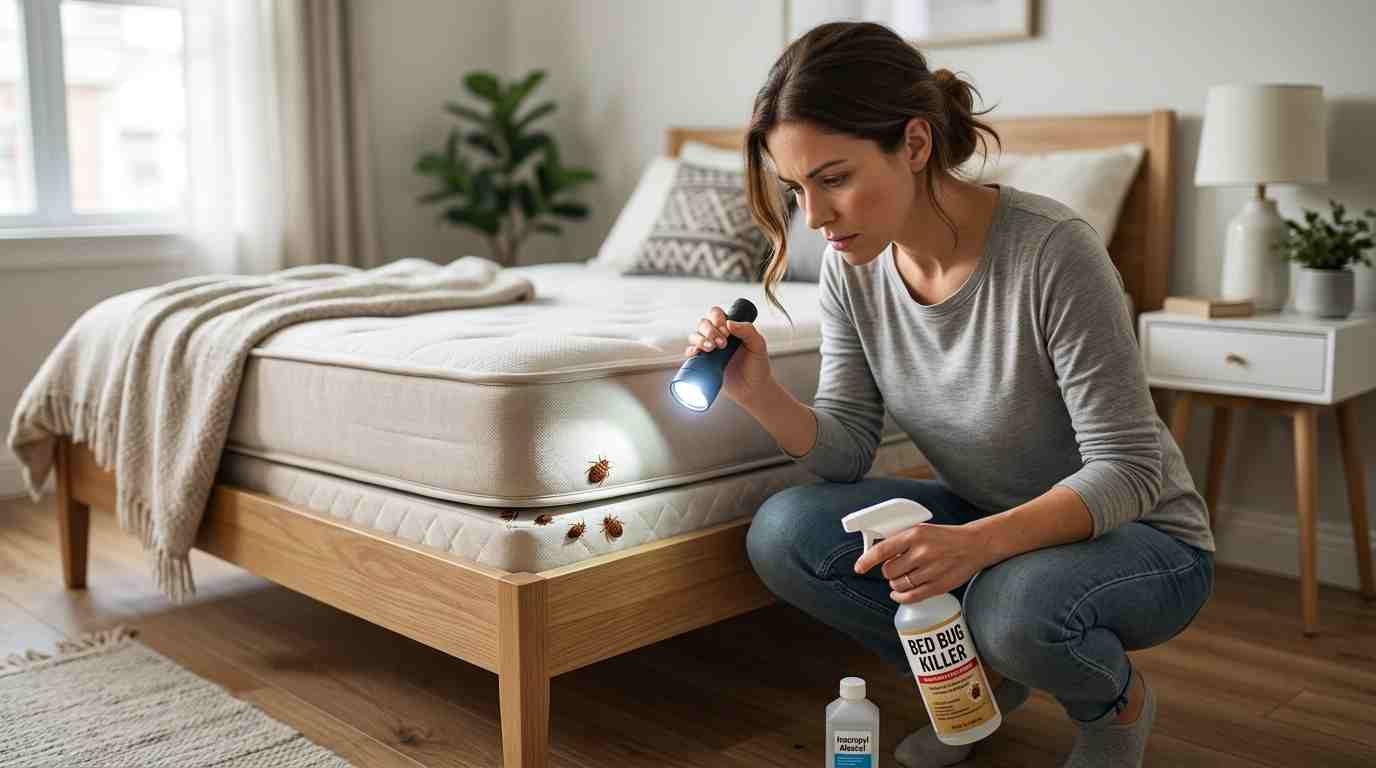
Waking up with itchy bites or finding tiny rust-colored spots on your sheets is stressful. Here is the good news: you can get rid of bed bugs, and acting early makes it easier and cheaper. This guide shows you how to confirm bed bugs, what you can do yourself, and when it’s time to call a professional.
We’re a local pest control team serving Ashburn and nearby Loudoun County, so we wrote this for how people here actually live: townhomes, condos, apartments, busy travel schedules, and shared walls.
Quick answer: To get rid of bed bugs, confirm the pest, contain the infestation, remove clutter, wash and heat-dry fabrics, vacuum thoroughly, encase your mattress, and then treat cracks and crevices. For most established infestations, a licensed professional is the most reliable option.
What Do Bed Bugs Look Like?
Adult bed bugs are flat, reddish-brown, and about the size of an apple seed. Young bed bugs (nymphs) are smaller and paler, and the eggs are tiny and whitish. Bed bugs do not fly or jump. They crawl, and they hitchhike.
Common signs of bed bugs
- Small reddish-brown or black specks (droppings) on sheets, mattress seams, or furniture
- Tiny rust-colored stains from crushed bugs
- Shed skins and eggs in seams, folds, and along bed frames
- Itchy, red bites, often in lines or clusters, usually on skin exposed while sleeping
- A musty, sweetly unpleasant odor in heavier infestations
Is it really bed bugs?
Bites alone are not proof, because other pests cause similar marks. Before you treat, rule out look-alikes:
- Fleas (common with pets): see our flea control page
- Mosquitoes (especially in summer): see mosquito control in Ashburn
- Spiders, which are often blamed for bites they did not cause: see spider control
- Cockroach nymphs, which can be mistaken for young bed bugs: see cockroach control
The surest confirmation is finding a live bug or fresh evidence. If you’re unsure, a professional bed bug inspection can settle it quickly. Our pest identification guide also helps you match bites and bugs to the right pest.
How Do Bed Bugs Get Into Ashburn Homes?
Cleanliness does not prevent bed bugs. They arrive on things and people. Common routes:
- Luggage and travel. Hotels, rentals, and airports are common sources, and Ashburn sits next to a major airport.
- Used furniture and mattresses, including curbside finds.
- Shared walls. In condos, apartments, and attached townhomes, bed bugs can move between units through wall voids and pipe chases.
- Visitors, rideshares, and workplaces, where bugs can hide in bags and clothing.
Bed bugs are not known to spread disease, but their bites cause itching, sleep loss, and stress. Scratching can lead to skin infections.
How to Get Rid of Bed Bugs: 8 Steps
Step 1: Confirm the problem
Use a flashlight and check mattress seams, the box spring, the headboard, bed frame joints, nightstands, and baseboards near the bed. A stiff card helps you scrape along tight seams.
Step 2: Contain the infestation
Do not move infested items through the house. Bag bedding and clothes in sealed plastic bags before carrying them to the washer. Avoid sleeping in another room, which can spread bugs to new areas.
Step 3: Declutter
Clutter gives bed bugs more places to hide. Clear the floor around the bed, remove items from under it, and pack belongings in sealed plastic bins. Plastic is better than cardboard, which gives bugs more places to hide.
Step 4: Wash and heat-dry fabrics
Wash bedding, curtains, and clothing, then dry them on the highest heat setting. The dryer does the real killing, so run it for at least 30 minutes. Items that cannot be washed can often go through the dryer on high heat alone.
Step 5: Vacuum thoroughly
Vacuum mattress seams, bed frames, baseboards, carpet edges, and furniture. Use a crevice tool. Empty the vacuum into a sealed bag and take it outside right away. Vacuuming reduces numbers but does not eliminate an infestation on its own.
Step 6: Encase your mattress and box spring
Bed bug-proof encasements trap bugs inside so they cannot feed, and they remove hiding spots. Leave them on for a long time, since bed bugs can survive many months without feeding.
Step 7: Treat cracks, crevices, and hiding spots
DIY options include steam on seams and crevices, and labeled bed bug products used exactly as directed. Keep in mind:
- Bug bombs and foggers are a poor choice. They do not reach where bed bugs hide and can scatter them.
- Some bed bugs have developed resistance to common pesticides, so over-the-counter products may not finish the job.
- Always follow label directions, especially around children and pets.
Step 8: Monitor and repeat
Check for new bites and evidence over the following weeks. Bed bugs rarely disappear in a single round, because eggs can hatch after your first treatment. Interceptor cups under bed legs and bed bug monitors help you see whether anything is still active.
Do Home Remedies Work?
Vinegar, essential oils, baking soda, and similar remedies might repel or kill the odd bug on contact, but they do not reach hidden bugs and eggs. Treat them as short-term helpers, not a solution. Delaying real treatment lets the population grow.
DIY vs. Professional Bed Bug Treatment in Ashburn
| Factor | DIY | Professional |
|---|---|---|
| Best for | Very early, single-spot finds | Established or spreading infestations |
| Upfront cost | Lower | Higher |
| Risk of missing hiding spots | High | Low |
| Handles eggs | Often not fully | Yes, with the right method |
| Re-treatment risk | Higher | Lower, often with follow-up visits |
Often the cheapest route is the one that works the first time. A failed DIY attempt can add weeks of delay and spread bugs to more rooms.
What professional bed bug treatment involves
A licensed technician typically:
- Inspects the bed, furniture, and surrounding rooms (and sometimes neighboring areas)
- Builds a treatment plan, often using heat, targeted residual products, or a combination
- Treats cracks, crevices, bed frames, and furniture
- Schedules a follow-up inspection, since eggs may hatch afterward
Heat treatment raises room temperatures high enough to kill all life stages, including eggs, and can often resolve a problem in a single visit, with no chemical residue. It does require preparation and everyone leaving the home during treatment. Ask your provider which method fits your home.
Learn more about our bed bug control services in Ashburn.
How to Prepare for a Bed Bug Treatment
- Bag and wash or dry-heat all bedding and clothing, and keep it sealed until the technician says otherwise
- Clear clutter from around beds and furniture
- Move furniture a few inches away from walls
- Remove items from under beds and from nightstand drawers as instructed
- Arrange for children and pets to stay elsewhere if your provider recommends it
- Do not apply your own sprays beforehand unless told to, since this can scatter bugs
Ask your technician for their exact prep list.
Bed Bugs in an Apartment, Condo, or Rental in Ashburn
Shared walls make bed bugs a team problem.
- Tell your landlord or property manager in writing as soon as you suspect bed bugs, and keep a copy.
- Photograph evidence such as bugs, stains, and bites.
- Check your lease and local landlord-tenant rules for who is responsible for treatment. Responsibility can depend on your lease and circumstances, so confirm the details for your situation.
- Treating one unit may not be enough. Neighbors above, below, and beside you may need inspection too.
If you own a condo or townhome in an HOA community, notify your HOA or management company as well.
Living in a shared building? We handle multi-unit bed bug treatment and pest control for townhomes and condos.
How to Prevent Bed Bugs From Coming Back
- Inspect hotel beds before unpacking, and keep luggage off the bed and floor
- After trips, run clothes through a hot dryer before putting them away
- Inspect secondhand furniture carefully before bringing it inside
- Keep clutter down, especially around beds
- Keep your mattress encasement on
- Check your sleeping areas now and then, especially after travel or guests
For a room-by-room list, use our home prevention checklist.
How Long Does It Take to Get Rid of Bed Bugs?
It depends on the size of the infestation and the method. Heat treatment can resolve many cases in one visit, with a follow-up check. Chemical treatment and DIY approaches usually take several weeks and more than one round. Bed bugs are hard to eliminate quickly, so be patient and keep monitoring.
When to Call a Bed Bug Exterminator in Ashburn
Call a professional if:
- You see bugs in more than one room
- DIY treatment has not worked after a couple of weeks
- You live in an attached home or apartment building
- You are losing sleep, or bites are getting worse
- You want it handled quickly and thoroughly
Frequently Asked Questions
Can bed bugs go away on their own?
Not realistically. Bed bugs can survive many months without a meal and reproduce steadily, so an infestation will not fade on its own.
Do bed bugs mean my home is dirty?
No. They travel on belongings and people, so clean homes get them too.
Can I get rid of bed bugs in one day?
Rarely by DIY. Professional heat treatment can eliminate most or all bed bugs in a single visit, though a follow-up check is smart.
Do bed bugs spread diseases?
They are not known to spread disease, but bites can itch, cause sleep loss, and sometimes lead to skin infections from scratching.
Should I throw away my mattress?
Usually not. A mattress can often be treated and sealed in an encasement. Discarding it can spread bed bugs if not done carefully, and a new mattress can be re-infested if the home is not treated.
How much does bed bug treatment cost in Ashburn?
Cost depends on home size, infestation level, and method. Get a written quote after an inspection and ask what follow-up visits are included.
Do bed bug sprays from the store work?
Sometimes on small, early problems, but resistance and hard-to-reach hiding spots limit them. Never use foggers or “bug bombs” as your main approach.
Related Pest Control Services

Ashburn Pest Control team. Licensed local technicians helping Ashburn and Loudoun County homeowners and renters deal with bed bugs and other household pests.